Can an unmet pregnancy craving cause a birthmark? What really causes birthmarks
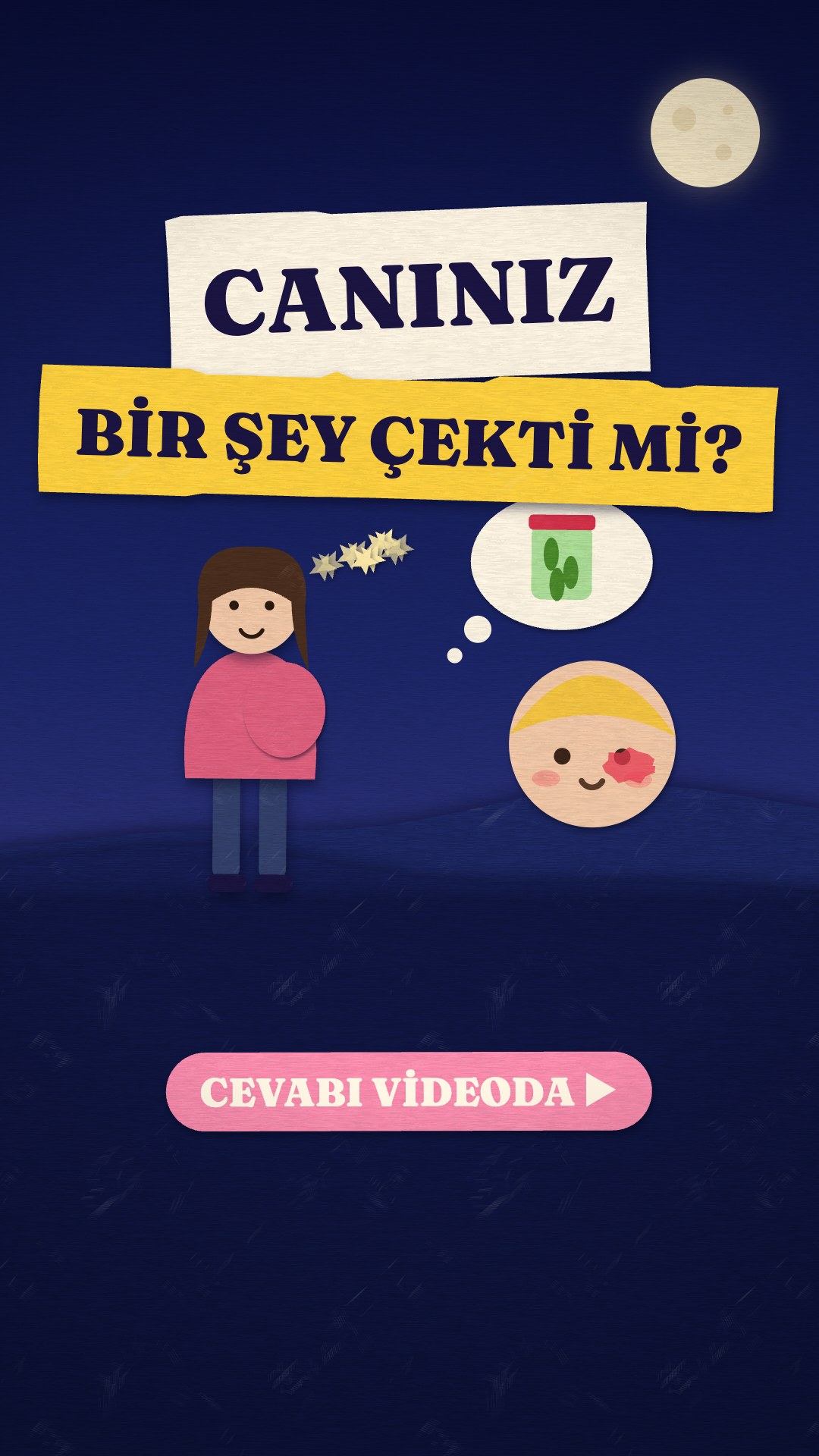
Did you crave something while pregnant but couldn't have it? Has anyone told you, "If you don't eat what you crave, the baby will have a birthmark"? Where does this belief come from? Let's take a look together.
What do people in Turkey say about cravings and birthmarks?
According to one review, it is believed that if a pregnant woman can't eat what she craves, her baby will have a mark shaped like that food.
In Tekirdağ, in northwestern Turkey, it is believed that if a woman eats something taken without permission and then touches her body, the baby will have a mark in the same spot; in Ordu, on the Black Sea coast, a woman with cravings won't put henna on her hands.
In a study in Kayseri, in central Turkey, about two-thirds of pregnant women said they had craved something.
Does that sound reasonable to you? Send this to a friend who's a new mom and see what she says.
Why is a birthmark called a "craving" in other languages?
Interestingly, this belief has even made its way into language. In Italian, a birthmark is called voglia, meaning "desire"; in French it's envie, again meaning "desire".
Italians call a strawberry-colored mark voglia di fragola, a "strawberry craving".
What really causes birthmarks?
The American Academy of Dermatology says it clearly: birthmarks are not caused by a mother not satisfying her cravings or by touching her belly.
Some come from blood vessels not developing properly, and some from skin-color cells clustering together.
A pink stork bite on the back of the neck is very common; a strawberry mark grows in the first months and then slowly shrinks.
At a hospital in İzmir, Turkey, blue-grey Mongolian spots were seen in a quarter of babies under one year old; these spots usually fade by age four.
A quick note for dads
Dads, if you hear "I'm craving pickles" in the middle of the night, no arguing; pickles won't leave a mark on the baby, but if you don't bring them, there'll be a mark on your record!
What should you do instead? Cravings and your baby's birthmarks
- Cravings are very common; as long as you eat a balanced diet, don't worry.
- If you crave things that aren't food, like soil, tell your doctor; it can be a sign of iron deficiency.
- Show your baby's birthmark to the doctor at a checkup.
Be sure to talk to your doctor if the mark is around the eyes, nose or mouth, if it's growing or getting darker, or if there are six or more café-au-lait spots.
Send this article to a friend who's pregnant.
Want your child to hear a bedtime story in your own voice every night? Baby Story Book creates personalized, educational stories with your child's name and reads them in your voice. You can also turn any story into a coloring book. Available on the App Store and Google Play.
Sources
- Yalçın H, Koçak N. Traditional beliefs and practices related to pregnancy: the example of Karaman. Kent Akademisi, 2013
- Başal HA. Customs, traditions and beliefs related to child development and education before, during and after birth in Turkey. Uludağ University Faculty of Education Journal, 2006
- Şahin H et al. Pregnant women's beliefs: does food choice affect the baby's sex and physical traits? Aile ve Toplum, 2009
- Treccani (Italian dictionary): voglia
- Larousse (French dictionary): envie
- American Academy of Dermatology (AAD): Birthmarks: Who gets and causes
- NHS (UK National Health Service): Birthmarks
- Cleveland Clinic: Stork Bite (Nevus Simplex)
- Egemen A et al. Frequency and characteristics of mongolian spots among Turkish children in Aegean region. Turk J Pediatr, 2006 (PubMed)
- NHS: Week 5 (pregnancy week by week; cravings and pica)
Frequently asked questions
Can an unmet pregnancy craving cause a birthmark?
No. The American Academy of Dermatology says it clearly: birthmarks are not caused by a mother not satisfying her cravings or by touching her belly. Some come from blood vessels not developing properly, and some from skin-color cells clustering together.
What is a Mongolian spot, and does it go away?
A Mongolian spot is a blue-grey mark. At a hospital in İzmir, Turkey, it was seen in a quarter of babies under one year old; these spots usually fade by age four.
When should you show a baby's birthmark to a doctor?
Show your baby's birthmark to the doctor at a checkup; be sure to ask if it's around the eyes, nose or mouth, if it's growing or getting darker, or if there are six or more café-au-lait spots.

Our Mobile Apps
Create your story from your phone
What can you do in the app?
Bedtime stories in your family's voice
Mom, Dad, Grandma, Grandpa… Record your voice by reading a story for about a minute, and every one of your child's stories will be read in that voice. Even when you're far away, they can fall asleep to your voice every night.
Your Child is the Hero
Your child becomes the main character with their own image and name. The learning process becomes natural, enjoyable, and lasting.
Audio Experience
Stories are presented with audio narration. Your child learns while listening, building strong foundations.
Coloring Book Mode
Enable coloring book mode for black-and-white line art images. Let your child color their own story!
PDF Export
Download your story in PDF format. Print it anytime, anywhere, or keep it digitally.
Multi-Language Support
Create stories in multiple languages. Perfect for multilingual families and language learning.