Kırk basması: what happens if two newborns meet in their first forty days?
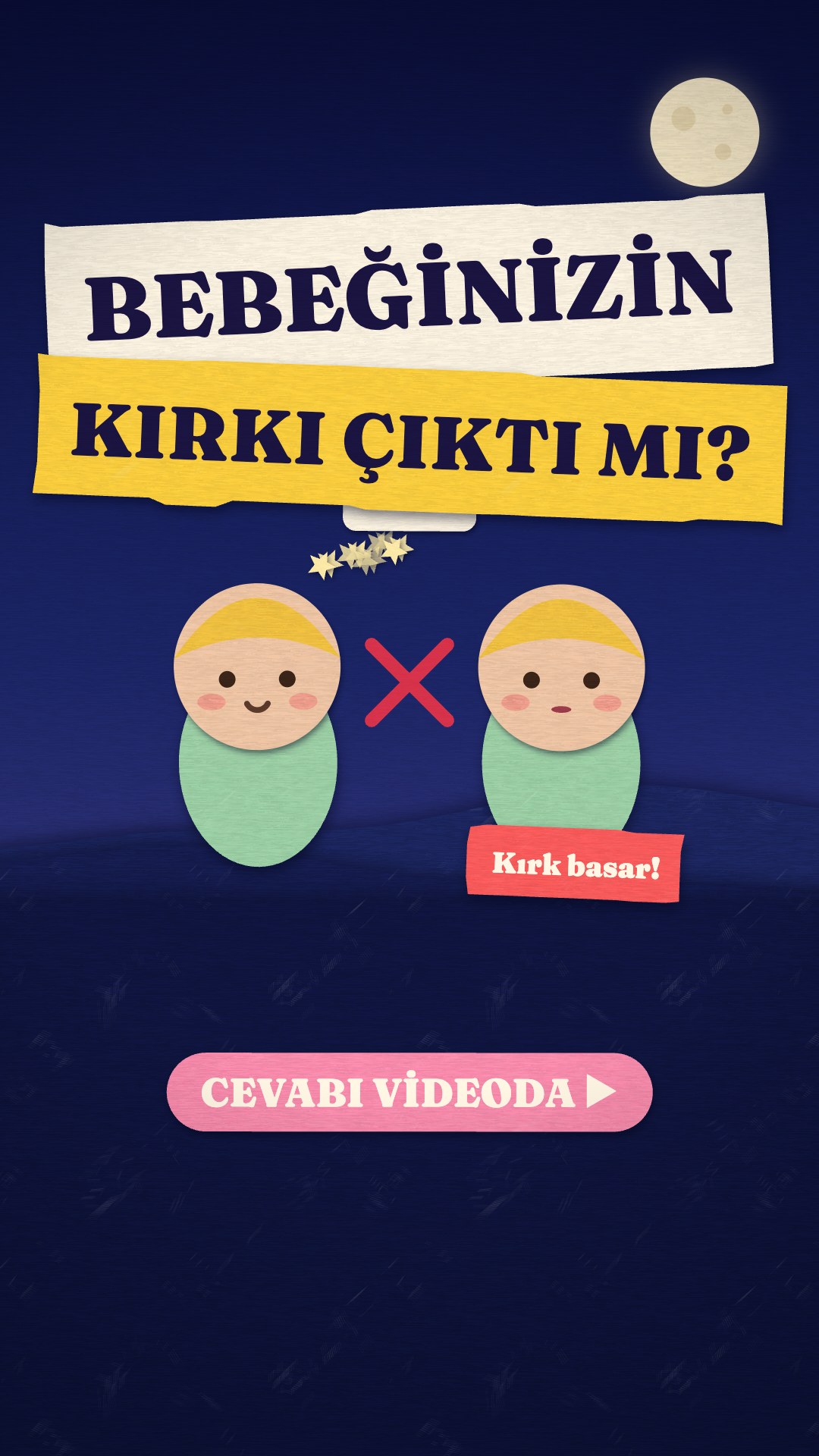
Has your baby completed their kırk, the first forty days after birth? Has anyone told you, "Two babies in their forty days must not meet, or kırk basması will strike"? Where does this belief come from? Let's take a look together.
What is kırk basması, and how do people try to prevent it?
According to the kırk basması belief, if two new mothers, or two babies who haven't yet completed their first forty days, meet each other, one of the babies won't thrive.
To prevent this, in Mucur, a town in central Turkey, two such mothers exchange needles with each other; in Erzurum, in eastern Turkey, two new mothers don't visit each other until their forty days are over.
On the fortieth day, the baby's forty days are "closed" with water over which prayers have been recited; in a study of five hundred mothers in Kars, in northeastern Turkey, about four out of every five said they had done this.
Does that sound reasonable to you? Send this to a friend who's a new mom and see what she says.
Do other cultures have a forty-day rest after birth?
Interestingly, a long rest after giving birth is a tradition in other cultures too. In Mexico it's called la cuarentena and lasts forty days; in Saudi Arabia, the forty days after birth (nifas) are also seen as a special period in which the mother is supported; and in China, the mother traditionally rests at home for a month.
And here's one more thing: the word "quarantine" comes from the Italian for "forty days"; ships arriving in Venice were held for forty days.
Can two newborns meeting really harm a baby?
There is actually no scientific evidence that two new mothers or two babies meeting each other harms a baby in itself, and an article in the journal of Turkey's Directorate of Religious Affairs (Diyanet) also states that the belief has no religious basis.
But in the first weeks, a baby's immune system is still developing. The American Academy of Pediatrics recommends hand washing, asks people who are sick to come once they've recovered, and advises anyone with a cold sore not to kiss the baby.
According to the World Health Organization, the postpartum period is the first six weeks after birth anyway, which is about forty days.
A quick note for dads
Dads, you're in charge of visitor traffic for those forty days; be the guard at the door asking, "Did everyone wash their hands?"
What should you do instead? How to protect your newborn in the first weeks
- Keep visits short in the first weeks.
- Everyone should wash their hands before touching the baby.
- Anyone who is sick should come once they've recovered.
- Breast milk carries antibodies that help protect your baby against illness.
- Don't skip your baby's checkup on day forty-one.
- Don't leave the new mother on her own.
Feeling down in the first days after giving birth is very common; if it doesn't pass within two weeks, tell your doctor.
Send this article to a parent whose baby is about to finish their first forty days.
Want your child to hear a bedtime story in your own voice every night? Baby Story Book creates personalized, educational stories with your child's name and reads them in your voice. You can also turn any story into a coloring book. Available on the App Store and Google Play.
Sources
- Duru A. Superstitions about menstruation and the postpartum period. Diyanet İlmî Dergi (journal of Turkey's Directorate of Religious Affairs), 2024
- Yılmaz M. An evaluation of beliefs and practices related to the kırklama tradition in Mucur. TULLIS, 2023
- Bolçay A. Traditions related to pregnancy, birth and childhood in Erzurum. Kastamonu Education Journal, 2011
- Karabulutlu Ö. Traditional newborn care practices in Kars. DEUHYO ED, 2014
- Waugh LJ. Beliefs Associated with Mexican Immigrant Families' Practice of La Cuarentena During Postpartum Recovery. JOGNN, 2011 (PubMed)
- Murad A et al. Breastfeeding practices in Saudi Arabia (Al-Nufas, the forty days). International Breastfeeding Journal, 2021
- Raven JH et al. Traditional beliefs and practices in the postpartum period in Fujian Province, China. BMC Pregnancy and Childbirth, 2007
- Centers for Disease Control and Prevention (CDC): History of Port Health (history of quarantine)
- World Health Organization, 2022: WHO urges quality care for women and newborns in critical first weeks after childbirth
- American Academy of Pediatrics (healthychildren.org): How to Cocoon a Newborn
- American Academy of Pediatrics (healthychildren.org): Herpes Simplex Virus (Cold Sores) in Children
- American Academy of Pediatrics (healthychildren.org): Breastfeeding Benefits Your Baby's Immune System
- Republic of Türkiye Ministry of Health: Infant, Child and Adolescent Follow-up Protocols
- American College of Obstetricians and Gynecologists (ACOG): Postpartum Depression
Frequently asked questions
What is kırk basması?
According to the kırk basması belief, if two new mothers, or two babies who haven't yet completed their first forty days, meet each other, one of the babies won't thrive. To prevent this, in Mucur two such mothers exchange needles, and in Erzurum two new mothers don't visit each other until their forty days are over.
Can two newborns meeting harm a baby?
There is no scientific evidence that two new mothers or two babies meeting each other harms a baby in itself, and an article in the journal of Turkey's Directorate of Religious Affairs also states that the belief has no religious basis. But in the first weeks, a baby's immune system is still developing.
What should visitors keep in mind in the first weeks?
Keep visits short in the first weeks; everyone should wash their hands before touching the baby, and anyone who is sick should come once they've recovered. The American Academy of Pediatrics also recommends that people with a cold sore don't kiss the baby.

Our Mobile Apps
Create your story from your phone
What can you do in the app?
Bedtime stories in your family's voice
Mom, Dad, Grandma, Grandpa… Record your voice by reading a story for about a minute, and every one of your child's stories will be read in that voice. Even when you're far away, they can fall asleep to your voice every night.
Your Child is the Hero
Your child becomes the main character with their own image and name. The learning process becomes natural, enjoyable, and lasting.
Audio Experience
Stories are presented with audio narration. Your child learns while listening, building strong foundations.
Coloring Book Mode
Enable coloring book mode for black-and-white line art images. Let your child color their own story!
PDF Export
Download your story in PDF format. Print it anytime, anywhere, or keep it digitally.
Multi-Language Support
Create stories in multiple languages. Perfect for multilingual families and language learning.